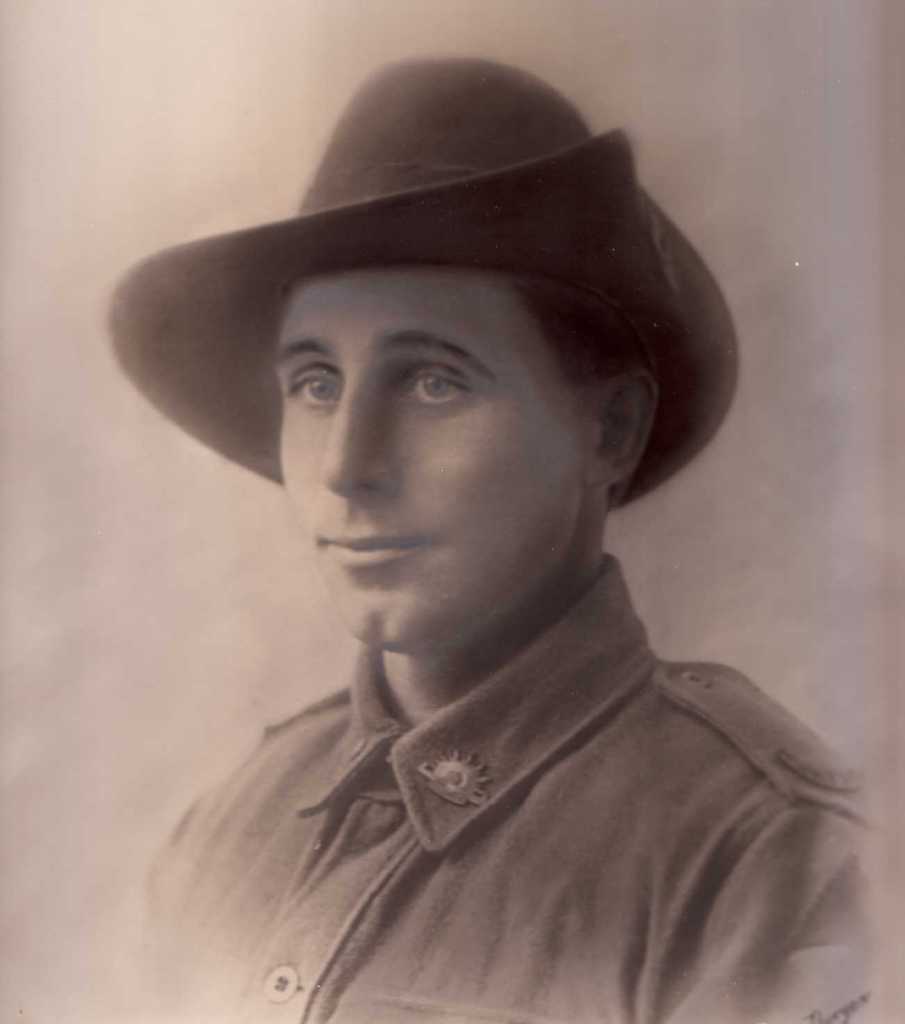
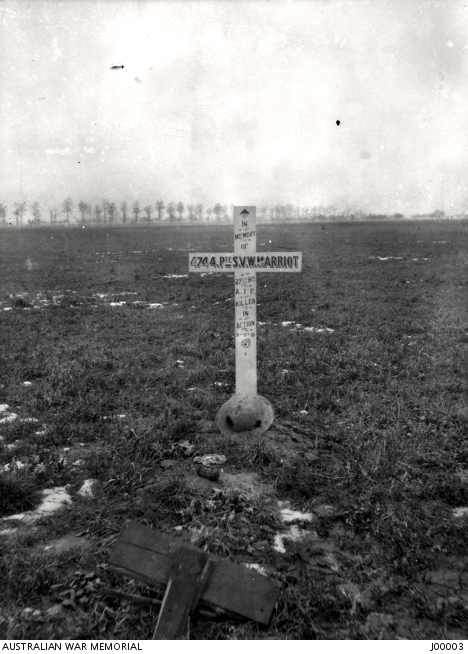
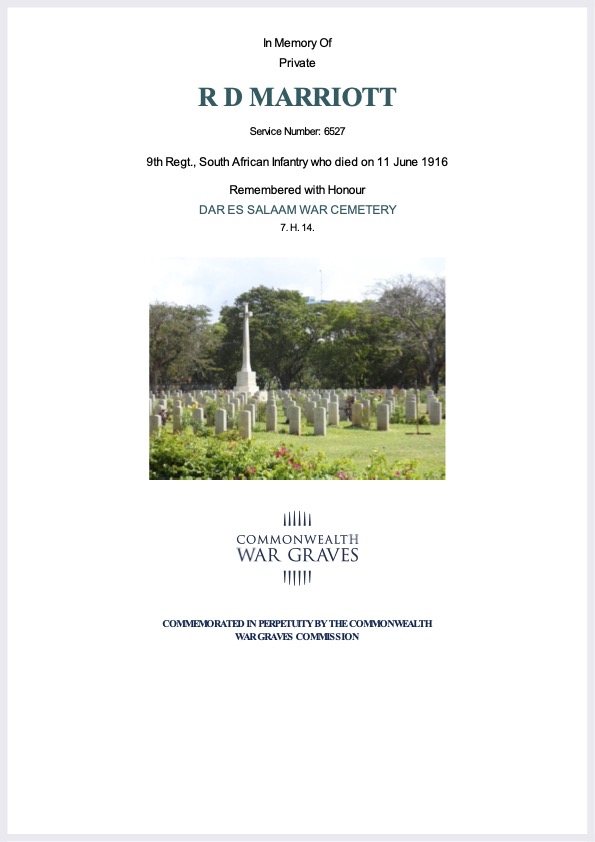
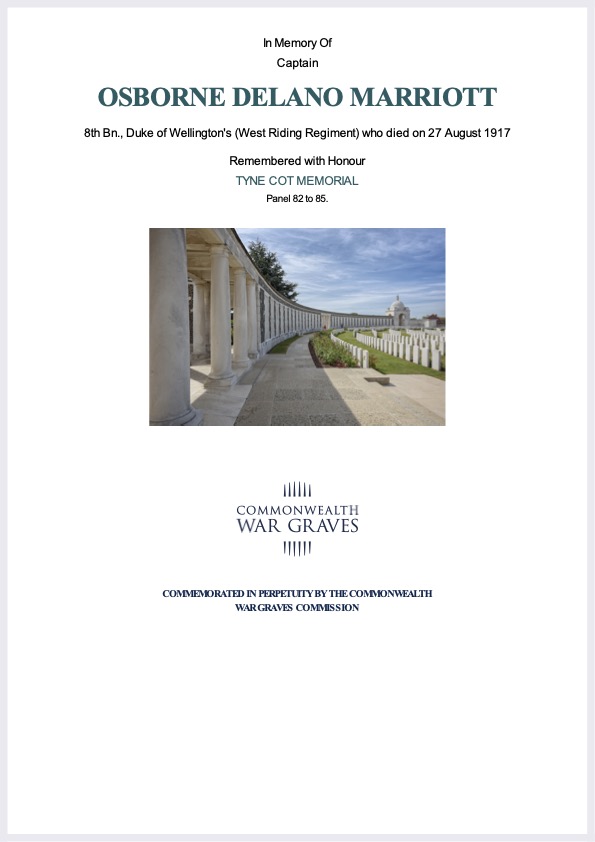
So, by late September 1918 (just a few weeks before WW1 ended on 11 November) four of the ten children born to Elizabeth Louisa Whale and Sidney Randolph Robert Allies Marriott had been killed fighting in various countries around the World. One was 27, two were 23 and one 22. What a devastating loss and one that must have been difficult for all the family to bear but particularly Elizabeth and Sidney.
Elizabeth was already the only surviving child of William Whale and Elizabeth Rose. Elizabeth had had four sisters and a brother but all of them died either in infancy or as young adults. Elizabeth’s father had died aged just 40 leaving her and her Mother alone.
After her marriage to Sidney, children follow year on year almost and as I said in Part I, the Marriotts seem to live a fairly grand life in nice houses in what are now London Boroughs but in what would then have been leafy suburbia.
After WWI had finished, Elizabeth continued to live in Streatham, South West London until the time of Sidney’s death in 1924 when Sidney’s Last Will and Testament details that all his estate would be left to his wife Elizabeth.
When Elizabeth died, two years later in 1926 aged 73, she is living with her son Claude and his family in their house in Horsell in Surrey. A very grandly named “Cintra”.
But it is Sidney’s life after WWI which gives us more of an insight into the effect of the loss of their sons I think.
Sidney had obviously been a very capable and educated man. He had held a high ranking post in the Civil Service. He had a large and well provided for family.
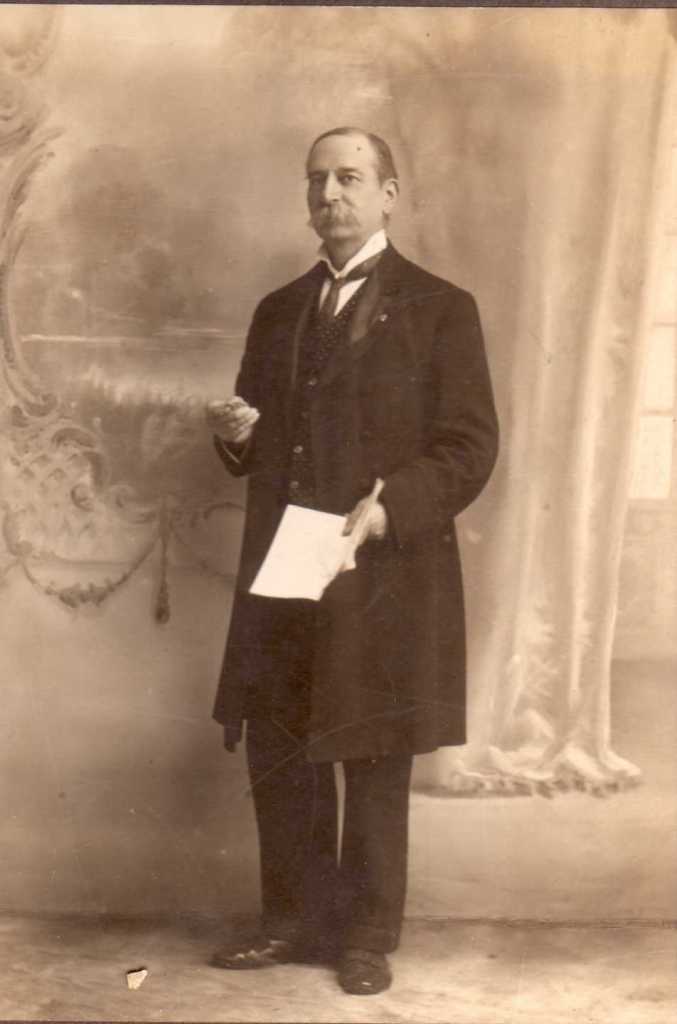
After he retired from Whitehall, it seems he held a reservist post as Quartermaster of the London Volunteer Regiment during WW1. The Quartermaster generally runs the Stores and Barracks for a Regiment and holds the rank of Captain or Major. Sidney is noted as such on his youngest child, Kenneth’s, Last Will and Testament in which Kenneth leaves his Estate to Sidney when Probate is granted in 1919.
Sidney died in 1924 aged 78. But when he died, his address is given as one in Herne Bay on the Kent coast and the place of his death is the Kent County Asylum in Chartham, Kent.
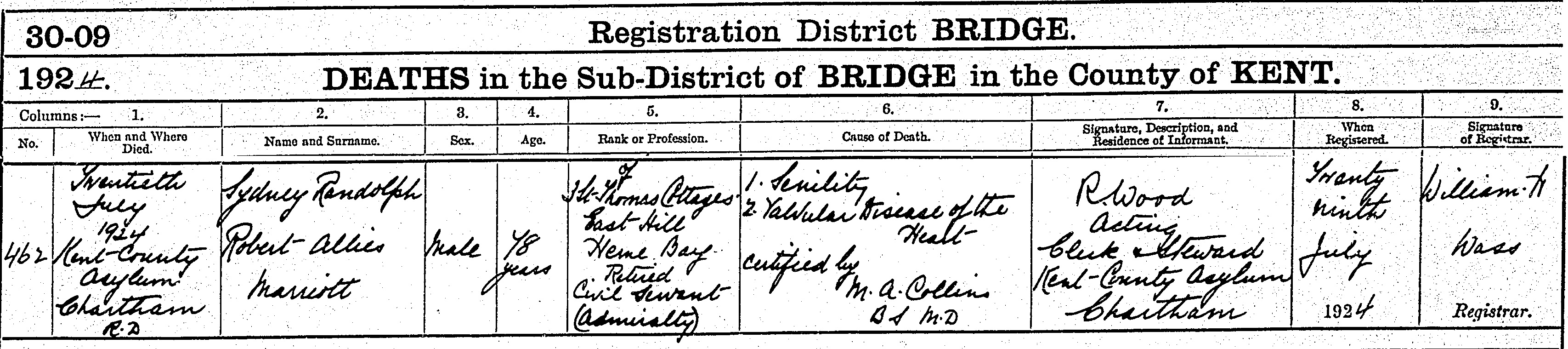
Regrettably, none of the records for this institution survive so it is difficult to know what Sidney’s diagnosis might have been or when exactly he was admitted. But certainly I can guess. I suspect (and so will you I should think) that the loss of his four boys one after the other in the brutal fighting of the War was just too much to bear and Sidney needed to be cared for in a specialist facility where he finally died away from his family and most sadly, his wife of 46 years. How very sad and what a lesson about the toll that War takes on families. Not just the obvious needless loss of life but the enduring effects of loss and sadness.
Just before I go. A quick word about Sidney’s Father, Thomas Weatherley Marriott (1791 – 1857). Thomas was a Barrister. In 1823, a year before Thomas Cubitt struck his deal with Lord Grosvenor and began his famous work in Belgravia to set out and build Eaton Square, a tract of land that formed part of the Moreau family property further to the West was sold for development to a John Betts and Thomas Weatherley Marriott.
Betts and Marriott proceeded to design and develop a simple grid of streets and a square with a connection to Brompton Road. Hampered by a lack of access to Kensington Road, Thomas Marriott struck a deal a few years later with Lord Dungannon to buy land to the east which provided access to the neighbouring Trevor Place and upwards to the north. And thus, Montpelier Square was formed. Properties there today sell for £8m plus. A direct relative of the Marriotts (from Shirley Marriott’s line in Australia who has provided the photographs I’ve used on these blog posts) with whom I’ve been corresponding on Ancestry.com tells me that any money that Thomas had in order to buy this prime real estate in Knightsbridge dried up after the development. No fortunes to be handed down through the Marriott line it seems.
So that’s me done with the Marriotts. What a family. Such stories and sadness. Lives lived and lives lost. Of a whole family changed by WW1. I think the distraction in this case was well worth it.
As always, thank you for reading this post.

 Linda Swinburne Family History Blog